
Transformer efficiency classes and BIS star ratings explained
A distribution transformer hangs on a pole or sits in a substation for twenty-five to thirty years, and over that life its losses cost far more than its purchase price. That is why India regulates transformer efficiency through BIS standards and the Bureau of Energy Efficiency's star labelling programme — and why the cheapest transformer on the quote comparison is often the most expensive one to own. Here is how the efficiency classes work and how to compare two offers correctly.
What the star label actually measures
The BEE star rating for distribution transformers, from one to five stars, is based on total losses at defined load points under the IS 1180 standard. A five-star unit has measurably lower no-load and load losses than a one-star unit of the same rating. The label applies to oil-filled distribution transformers in the common utility ratings, and BIS certification against IS 1180 is mandatory for the covered range — it is not a voluntary marketing badge.
The physics behind the rating is simple. No-load losses, mostly in the core, run twenty-four hours a day regardless of load. Load losses, mostly copper losses in the windings, grow with the square of the load current. A transformer that idles at twenty percent loading most of the year is dominated by its core losses; one feeding a busy industrial feeder is dominated by copper.
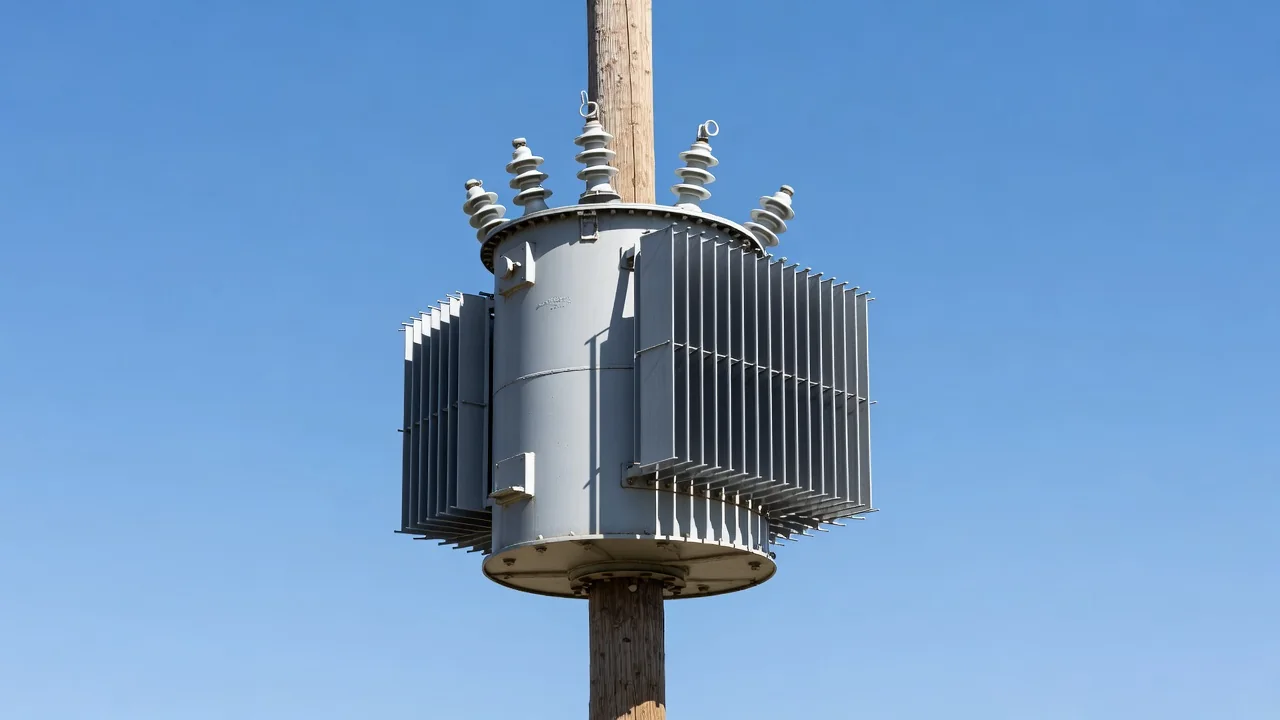
Reading a loss figure like a buyer
Every tender quote for a transformer states guaranteed losses: no-load loss in watts and load loss at rated current. These numbers are testable, and the routine test certificate will show the measured values against the guarantee. A vendor who guarantees low losses and misses them at test owes you either a replacement or a price reduction, depending on the contract's penalty clause — which is why that clause deserves more attention than the payment terms.
| Concept | What it is | When it dominates |
|---|---|---|
| No-load (iron) loss | Core loss, constant while energized | Lightly loaded or always-on transformers |
| Load (copper) loss | Winding loss, rises with square of current | Heavily loaded feeders |
| Star rating | BEE grade from total losses per IS 1180 | Utility distribution purchases |
| Capitalized cost | Price plus present value of lifetime losses | Correct basis for comparing offers |
The capitalization calculation that decides the order
Utilities and serious industrial buyers compare transformers by capitalized cost: the purchase price plus the present value of losses over the expected life. The formula assigns a rupee value per watt of no-load loss and per watt of load loss, based on energy tariffs, loading pattern and the cost of capital. At typical industrial tariffs, one kilowatt of no-load loss running continuously for twenty years represents a six-figure sum in undiscounted energy — enough to flip the ranking of two quotes whose prices differ by far less.
- Ask every bidder for guaranteed losses at the same reference temperature.
- Fix the evaluation formula in the tender before opening the price bids.
- Check the routine test certificate against the guarantee, unit by unit.
- Include a loss-penalty clause with real numbers, not a vague right to reject.
Amorphous core and CRGO: the material choice
The star climb is largely a materials story. Conventional cores use cold-rolled grain-oriented steel; amorphous metal cores cut no-load losses dramatically, which is why high-star designs often use them in distribution ratings. The trade-offs are practical rather than mysterious: amorphous cores cost more, are mechanically more delicate in transport, and the benefit shrinks if the transformer runs at high load most of the time. For a lightly loaded rural feeder, amorphous wins clearly; for a packed industrial substation, run the capitalization math before paying the premium.
One more variable enters at tender stage: the loading forecast. A transformer bought for today's load that doubles in eight years was perhaps undersized at any efficiency class, because load losses grow with the square of current. Buying a step up in rating often beats buying a step up in star class — the capitalization table answers which, if you feed it honest load growth.
Risks and red flags in transformer procurement
The first red flag is a quote that states efficiency but not the loss split — without separate no-load and load figures you cannot run a serious comparison. The second is guaranteed losses quoted at a different reference temperature than the standard specifies, which flatters the numbers. The third, and most common, is skipping the loss evaluation because the budget head approves prices only. Buying the cheapest transformer is a twenty-year energy contract signed by someone who will not be there to pay the bills.
Losses are the price tag that keeps running after the invoice is closed. Buy them as carefully as the tank and the windings.