
Grid modernization in India: smart meters, SCADA and HVDC
India's grid is being rebuilt while it runs. Smart meters replace spinning discs in hundreds of millions of homes, SCADA systems spread from transmission control rooms into distribution, and high-voltage direct current links move gigawatts across the subcontinent. For equipment buyers, vendors and plant engineers this is not background noise — it is the demand pipeline and the technical baseline for the next decade of industrial power work.
Smart meters and the RDSS push
The Revamped Distribution Sector Scheme targets the replacement of conventional meters with prepaid smart meters on a scale of roughly 250 million connections, bundled with loss reduction and distribution infrastructure upgrades. For utilities the attraction is plain: billing efficiency and theft detection improve immediately, and time-of-day tariffs become technically possible. For vendors it means a multi-year order flow for meters, communication modules, head-end systems and the integration work that glues them to billing.
The installation wave has a second-order effect that matters to industrial plants: utilities with smart metering data start enforcing load and power-factor discipline far more precisely. A factory that ignored its maximum demand penalties for years will find them computed to the fifteen-minute block.
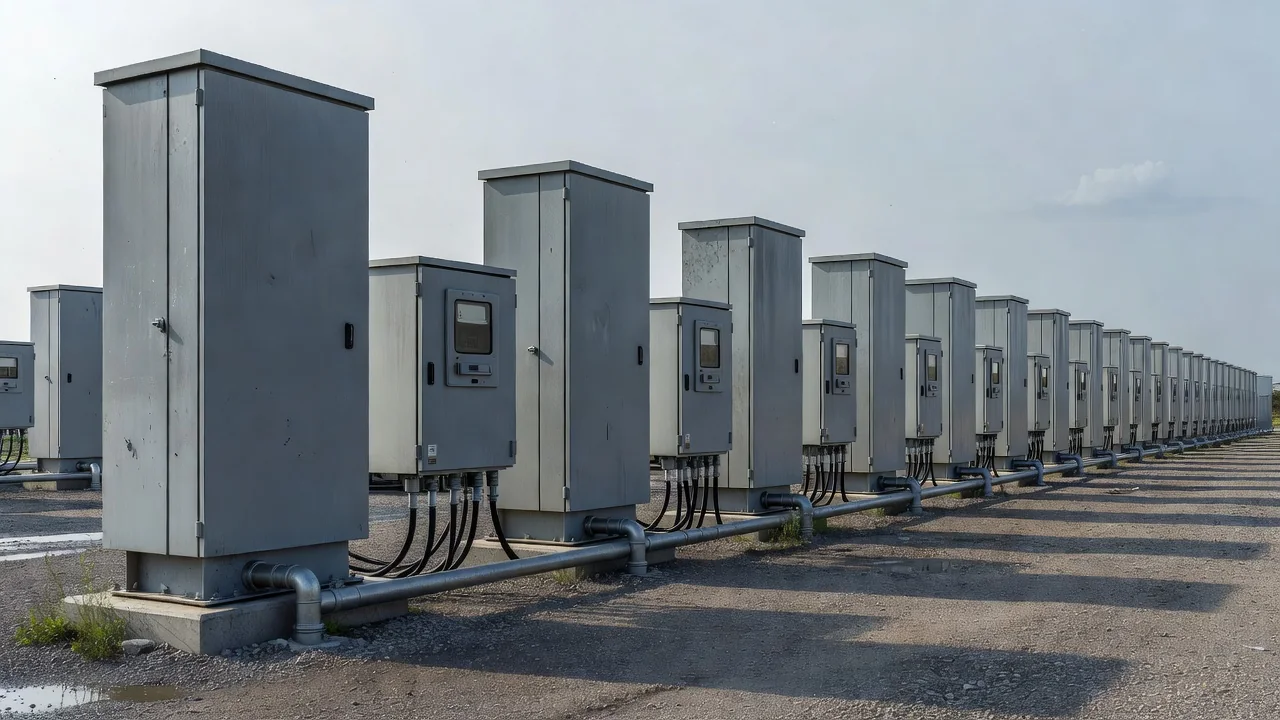
SCADA moves down the voltage ladder
Supervisory control and data acquisition has lived at transmission level for decades; the current wave pushes it into distribution substations and even large industrial intakes. A 33/11 kV substation that once got a weekly patrol now reports its feeders, breakers and transformer taps to a control room in real time. For the equipment market this drags along demand for RTUs, protection relays with communication ports, fiber and radio links, and the cybersecurity layer that nobody budgeted for five years ago.
| Programme area | What is being deployed | Who buys it |
|---|---|---|
| Smart metering (RDSS) | Prepaid smart meters, HES, MDM integration | State distribution utilities |
| Distribution SCADA | RTUs, relays with comms, control centres | Utilities and large industrial estates |
| HVDC transmission | Converter stations, valves, controls | Central transmission utilities |
| Renewables integration | Forecasting, grid-scale storage interfaces | Load despatch centres, generators |
HVDC: the quiet backbone
High-voltage direct current links solve a specific Indian problem: generation concentrated in one region, load in another, thousands of kilometres apart. The ±800 kV Raigarh–Puguluru UHVDC link, rated around 6,000 MW, is the flagship example, moving power from Chhattisgarh to Tamil Nadu. Converter stations at each end are among the most demanding industrial electronics installations in the country — thyristor or IGBT valves, converter transformers, harmonic filters and control systems that must run for decades.
- HVDC makes sense above a break-even distance where AC losses and stability costs overtake converter costs.
- Each converter station needs strong harmonic filtering and reactive support design.
- Bi-pole operation lets half the link keep running during maintenance.
- For vendors, HVDC work is qualification-heavy: reference lists matter more than price.
What this means for industrial plants
There is also an opportunity buried in the transition. Plants with captive generation or large flexible loads can increasingly participate in demand response and merchant power arrangements that a smarter grid makes administratively possible. The metering and communication layer the utility installs for its own reasons becomes the plant's window into real-time energy costs — and the plants that read that data first will buy power differently.
Plant engineers feel grid modernization as new rules rather than new hardware. Smart metering brings granular demand charges; distribution automation brings faster fault isolation but also faster tripping of your feeder; renewable-heavy grids bring voltage fluctuations that stress old drives and relays. The practical responses are known: maintain power factor correction and verify it against the new meter data, review protection settings with your utility after their automation upgrades, and treat supply quality monitoring as a permanent instrument, not a project.
Risks and red flags for buyers and vendors
For vendors chasing utility tenders, the red flag is qualification fatigue: smart metering and SCADA tenders demand prior deployments, interoperability tests and cybersecurity documentation, and joining late means joining as someone's subcontractor. For industrial buyers, the trap is assuming the grid upgrade is the utility's problem — a plant whose drives trip on every voltage dip will discover that the modernized grid still has dips, just better measured ones. Budget the power quality audit now; the data your new meter collects will make the argument for you.
The grid of 2030 is being tendered today. Whether you sell into it or buy power from it, the specifications are already written — read them early.