
EMD refund on an Indian tender: read this NIT
Earnest money (EMD) on an Indian public tender is a deposit that says you will stand by the bid. It is not a fee you should assume is gone, and it is not a fee you should assume comes back next week without a condition. People search refund rules because the money sits after the opening and nobody in the group chat agrees whether it returns to losers, to everyone except L1, or only after the agreement is signed. This page is what to read in this NIT. It is not a universal finance circular and not legal advice. The instrument — DD, bank guarantee, online — and the refund sentence are in the document you are bidding. If they are not, ask in the clarification window, not after the opening.
Tender fee, when it exists, is often stated as non-refundable. EMD is a different line. Mixing the two is how vendors wait for a refund that the fee clause never promised. MSME or exemption claims have their own papers; an exemption you did not attach is not an exemption the opening committee will invent for you.
What the NIT usually splits — and what you must not guess
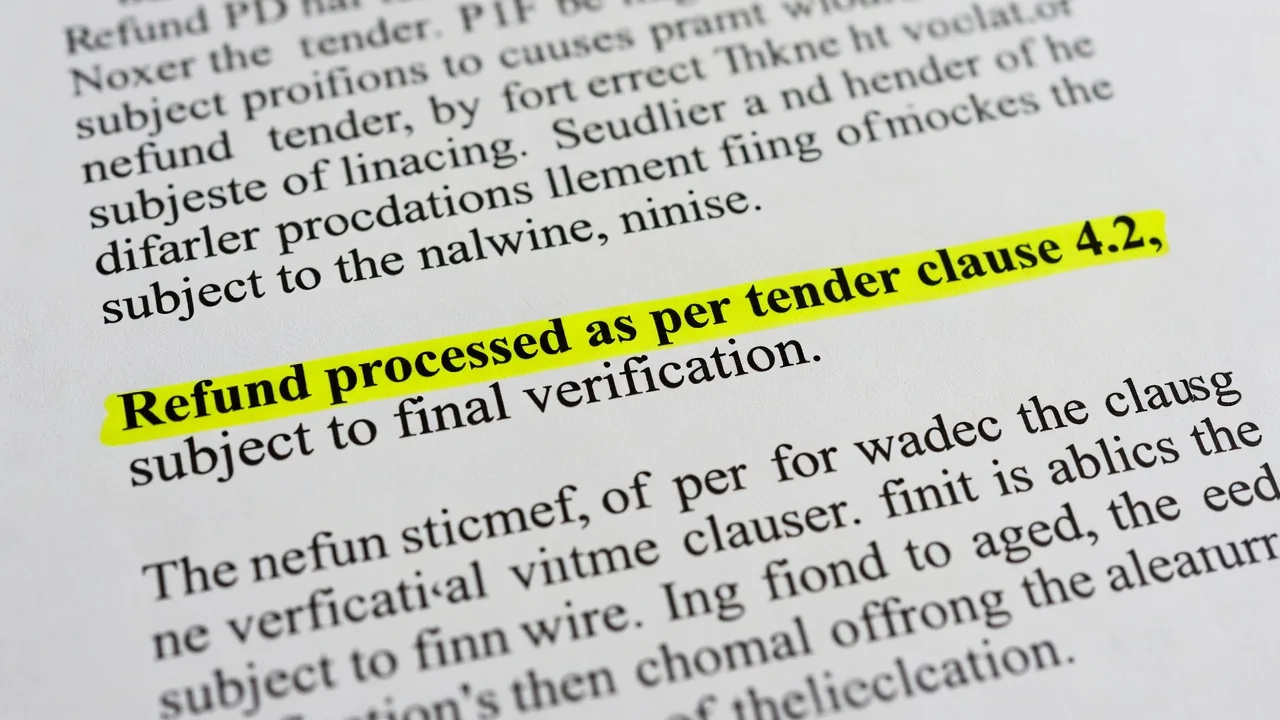
Find the clause that names the amount, the form, the validity of a guarantee, and who gets money back when. Unsuccessful bidders often see EMD returned after award or after a stated period; the successful bidder often sees it retained until security deposit or performance bank guarantee replaces it. “Often” is not your clause. Your clause is the paragraph in this PDF. Write the bank timeline you can live with. Online portals sometimes refund to the same account on a schedule you cannot hurry with a phone call. A guarantee that expires before the stated bid validity is a gift to the committee: they can reject the bid without reading your price.
- Separate tender fee from EMD in your head and in the covering letter.
- Copy the refund sentence into the bid note so the team stops arguing from memory.
- Match the instrument to the clause: amount, days, payable to, validity.
- If you claim exemption, attach the paper the NIT names. A verbal “we are MSME” is not an attachment.
- Do not expect a same-week refund because a friend got one on another portal.
| Item | Usually | You still verify |
|---|---|---|
| Tender fee | Kept | This NIT’s fee sentence |
| EMD, unsuccessful | Returned after a stated point | When, to whom, how |
| EMD, successful | Held or adjusted toward security | Until which document replaces it |
| Exemption | Only with the named proof | Whether this tender allows it |
The risk of treating EMD as small change
A bid withdrawn after opening can cost the deposit if the clause says so. A guarantee with the wrong beneficiary name can make the bid non-responsive before price comparison. Chasing refunds without the tender number and the UTR or guarantee number is how accounts sit in a queue. If the amount hurts the company, you cannot afford a casual bid. That is the point of EMD. It is meant to hurt a little. If it would hurt a lot, you are not looking at a tender. You are looking at a hole.

What to lock before you pay
Fee versus EMD, the exact refund sentence, the instrument and its validity, and the exemption paper if you claim one. The deposit is not a tip and not a mystery tax. It is a sentence in the NIT. Read that sentence twice, pay only what it asks, and keep the proof with the bid. Everything you hear in a group after opening is someone else’s tender, not yours.