
Spares and field services: how ISG supports installed equipment
A drive panel commissioned in 2011 and a motor rewound in 2024 have one thing in common: both depend on the spares and service chain behind the original equipment. For industrial buyers the purchase order is only the midpoint of the story. This article explains how the after-sales side of the Industrial Systems Group is organized, what a realistic spares strategy looks like and where plants usually get it wrong.
How the service side is structured
ISG's support for installed equipment runs through the same product groups that build it. Drive systems, excitation panels, control and instrumentation packages each have their own engineering desk in Bengaluru, backed by regional service offices that handle site visits. When a 6.6 kV drive trips at a cement plant in Andhra Pradesh, the first call goes to the regional office, and the deeper fault analysis lands with the design group that wrote the original software.
This structure has a direct consequence for the buyer: the person who can modify your drive parameters is rarely the person who visits your site first. Serious faults move in two steps — diagnosis at site, fix at the works level — and the contract should reflect that, with response times defined for each step rather than a single vague "48 hours" promise.
The three tiers of spares
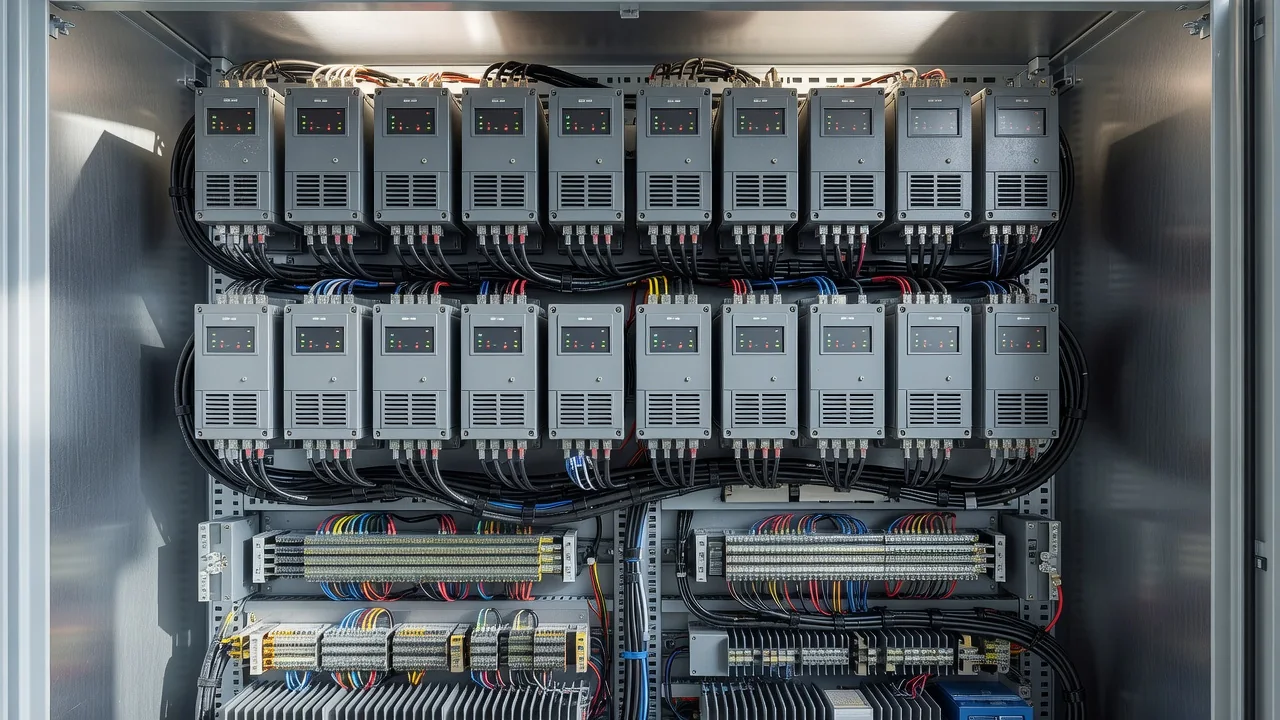
Service engineers divide spares into three working tiers, and the distinction saves real money. Commissioning spares are consumed during erection and first runs — fuses, filters, gaskets, a spare power card for the critical drive. Insurance spares are the expensive, low-probability items: a spare converter module for a 2 MW medium-voltage drive, a spare excitation transformer. Consumables and wear parts form the third tier, sized from actual running hours rather than fear.
| Tier | Examples | Stocking logic |
|---|---|---|
| Commissioning spares | Fuses, filter mats, seals, one power card | Mandatory with the main order |
| Insurance spares | Converter module, excitation transformer, spare CPU | One per fleet, shared across identical units |
| Wear parts | Brushes, bearings, contact kits, fans | From running hours and maintenance plan |
| Obsolescence buys | Last-time-buy electronics, HMI panels | Before the product line closes |
Obsolescence: the quiet risk in electronics
Power electronics age faster than motors. A drive line can go out of production within ten to fifteen years while the driven mill runs for thirty. When the product line closes, the works announces a last-time-buy window, and plants that miss it end up reverse-engineering IGBT stacks or buying cannibalized cards. The discipline that works is simple: register every control panel and drive with the product group, track the obsolescence notices, and budget the last-time-buy in the year it is announced, not the year the card fails.
- Keep one spare power card per identical drive fleet, not per drive.
- Store spare electronics in a dry, dust-free room; a failed spare is worse than none.
- Record firmware versions in the asset register — the wrong card with the right part number still fails.
- Renew the service contact list every year; regional offices reorganize.
Service contracts: what is actually worth paying for
An annual maintenance contract makes sense where the equipment is exotic for the plant's own crew: medium-voltage drives, static excitation, large rectifier stations. A typical AMC covers scheduled preventive visits, emergency call-outs at preferential rates and a defined spares discount. What it rarely covers — and buyers discover this late — is the cost of parts themselves and modifications triggered by process changes. Read the exclusions page first; it is the honest part of the document.
For standard LV panels and motors, a competent in-house team with a good spares shelf usually beats an AMC on cost. Reserve the contract money for the equipment where a two-day outage costs more than the contract fee.
A middle path that many plants overlook is the rate contract for specific jobs: rewind prices per kW, drive-module repair at fixed labour plus parts, annual thermography of panels. It keeps the emergency out of the pricing and gives the works a predictable load. Ask for it after the warranty year, when both sides know the equipment's real behaviour.
Risks and red flags for buyers
The first red flag is a spares list copied from a different installation. A 1,200 kW drive for a fan and the same rating for a mill do not share the same stress profile, and the spares list should come from the duty, not from the catalogue page. The second is counterfeit or grey-market power cards: they carry the right label and the wrong firmware, and they fail under load. Buy through the registered channel even when it is slower. Finally, watch warranty accounting on repaired modules — a repaired card normally carries a shorter warranty than a new one, and that difference belongs in your maintenance budget.
Good after-sales planning is unglamorous: an asset register, a dry shelf, a phone number that still works. Plants that keep these three rarely make emergency calls at night.