
Writing SOPs that shop-floor teams actually follow
Every plant has them: procedures written by an engineer, approved by three managers, filed in a controlled folder — and quietly ignored by the shift crew that does the actual work. The gap between the written procedure and the practiced one is where incidents and quality escapes are born. Writing SOPs that people follow is a craft with learnable rules, and it starts with admitting why the unread ones fail.
Why operators ignore perfectly good procedures
The most common reason is that the procedure was written for an auditor, not for a person holding a wrench at 2 a.m. It names the regulation it satisfies but not the valve tag the operator is looking for. The second reason is staleness: the equipment was modified two years ago, the SOP was not, and the crew learned to work around both. The third is length. A forty-page procedure for a twenty-minute task gets remembered as "check the usual things," which is exactly the improvisation the document was meant to prevent. Length is not thoroughness; the thorough SOP is the one whose every line earns its place at the point of work.
Structure that survives the night shift
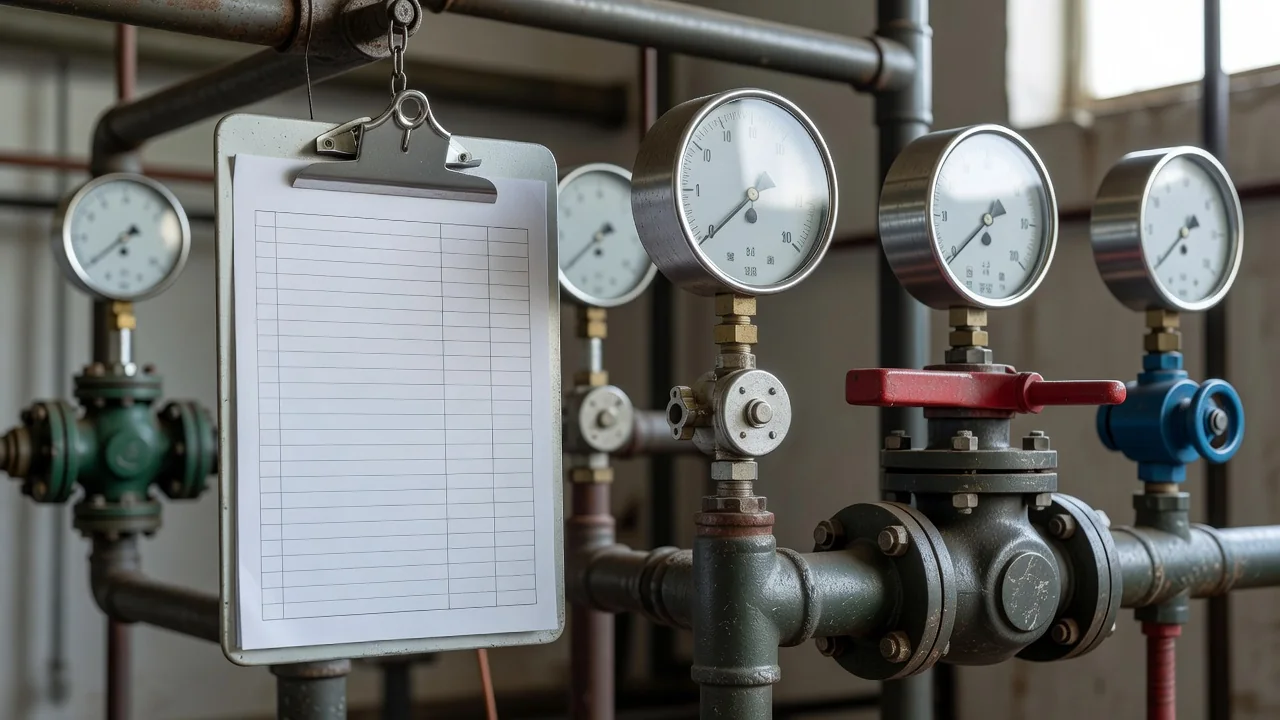
A usable SOP answers four questions in order: when does this apply, what do I need before starting, what exactly do I do step by step, and how do I know I finished correctly. Steps are written as commands with one action each, naming the actual equipment tags from the field, not generic descriptions. Decision points get explicit criteria — "if the pressure reads above 6 bar, stop and call the shift engineer" — because a vague "check the pressure" teaches nothing and protects nobody.
Keep the main body short and push reference material into annexes. The operator needs the sequence and the limits; the engineer who audits the system needs the background calculations. Serving both in one document serves neither. A useful ceiling is what fits on a two-sided laminated sheet at the workplace; anything longer belongs in a reference annex that the audit reads and the shift does not carry.
| Element | Good practice | Common failure |
|---|---|---|
| Purpose and scope | Two lines naming the task and its limits | A page of regulatory quotations |
| Steps | One action per step, real equipment tags | Paragraph steps, generic descriptions |
| Limits and criteria | Numeric, with the stop condition stated | Ensure proper operation |
| Records | A simple form attached to the SOP | Record appropriately |
Write it with the people who do the work
The single strongest predictor of an SOP that gets used is whether the crew helped write it. A walkthrough draft tested by the operator who runs the task exposes wrong tags, impossible sequences and missing tools in one afternoon — issues invisible from the author's desk. It also builds ownership: crews defend a document they helped shape and sabotage one that landed on them. This is not democracy for its own sake; it is the only reliable way to capture the informal knowledge that makes the task actually work, like the valve that needs an extra half turn because its stem wears.
- Field-test the draft with the least experienced person likely to use it.
- Use photographs of the actual panel or valve, with tags visible.
- Version every change and brief the crew on what moved and why.
- Review on a schedule tied to equipment modifications, not calendar habit.
Version control and the training link
Testing deserves a second mention. A drill that uses the SOP — a mock isolation, a tabletop emergency walk-through — is the cheapest audit available. Crews performing the procedure against the document find its ambiguities in an hour, and the fixes land while the author still remembers the intent. Schedule one drill per critical SOP per year and record the changes that come out of it.
An SOP without version discipline is worse than none, because two crews following two revisions are improvising with paperwork. The controlled copy must be the one at the workplace — laminated at the panel, not locked in the supervisor's drawer — and superseded copies must actually disappear. Every revision triggers a short briefing, recorded against the training matrix, so an auditor can trace who works to the current version. That traceability is what turns a procedure from a liability into a defense.
Risks and red flags
The first red flag is the photocopied favorite: the crew's annotated copy that differs from the controlled one, which signals the controlled version is wrong or unread. The second is the procedure that contradicts the interlock — if the SOP says bypass the trip, the document is writing tomorrow's incident report. The third is audit theatre, where SOPs multiply before every certification audit and decay after it. Write fewer procedures, keep them true, and test them against the shift that works the hardest hours. A procedure is a promise the paper makes to the person doing the job; keep it honest.